Future-Proof Senior Care: How to Select an Assisted Living Home That Adjusts to Altering Requirements
Business Name: BeeHive Homes of Raton
Address: 1465 Turnesa St, Raton, NM 87740
Phone: (575) 271-2341
BeeHive Homes of Raton
BeeHive Homes of Raton is a warm and welcoming Assisted Living home in northern New Mexico, where each resident is known, valued, and cared for like family. Every private room includes a 3/4 bathroom, and our home-style setting offers comfort, dignity, and familiarity. Caregivers are on-site 24/7, offering gentle support with daily routines—from medication reminders to a helping hand at mealtime. Meals are prepared fresh right in our kitchen, and the smells often bring back fond memories. If you're looking for a place that feels like home—but with the support your loved one needs—BeeHive Raton is here with open arms.
1465 Turnesa St, Raton, NM 87740
Business Hours
Families rarely start taking a look at assisted living neighborhoods since whatever is calm and predictable. Normally there has actually been a fall, a medical facility stay, a roaming event, or a slow build-up of small worries that no longer feel small. The instant instinct is to resolve the issue in front of you: "We need a safe place where Mom can get help with showers and medications."
That instinct is easy to understand, but it is likewise where many people make their biggest error. They purchase what their parent requires this month, not what they are likely to require three, 5, or eight years from now. The result is avoidable disruption, unforeseen costs, and agonizing moves at the very point when stability matters most.
Future-proof senior care starts with asking a different concern: not just "Is this an excellent assisted living home for today?" however "Will this community still fit if things get more complicated?"
Drawing on what I have seen in senior care over many years, including both outstanding and deeply flawed placements, here is how to examine an assisted living home with an eye on the long arc of aging, not just today moment.
Understanding how requirements generally change over time
Every individual ages in their own way, yet specific patterns appear so typically that ignoring them is dangerous. When households just take a look at existing requirements, they underestimate how quickly the care photo can change.
Most residents who move into assisted living need aid with a handful of things: maybe medication tips, meal preparation, house cleaning, or some assistance with bathing and dressing. They are typically still social, still able to speak for themselves, and often still driving or a minimum of directing their own days.
Over the years, numerous factors tend to shift:
- Mobility gradually decreases. Somebody who walks separately today may require a walker in one or two years, and a wheelchair after that. Stairs become a barrier, long corridors end up being stressful, and fall danger rises.
- Medical complexity increases. A resident may start with well-controlled diabetes and hypertension, then develop heart failure or COPD, or require anticoagulation, or go through a stroke or a joint replacement, each including monitoring and care tasks.
- Cognitive changes sneak in. Moderate lapse of memory can progress to substantial memory loss, confusion, or dementia. Behaviors like roaming, agitation, or nighttime wakefulness may appear.
- Continence and personal care needs change. Toileting support, incontinence care, and more hands-on help with bathing, grooming, and dressing usually increase.
- Emotional and social needs develop. Buddies at the community die or move away. A partner passes. A once-outgoing resident may become withdrawn or depressed.
When you tour an assisted living neighborhood, you are fulfilling it during the honeymoon phase: your parent is new, personnel are attempting to impress, and needs are reasonably modest. A much better test is this: "If my parent is two times as frail as they are now, would this location still work?"
That frame of mind shifts what you pay attention to.
Levels of care: what can stay, what should move
The terms "assisted living," "memory care," and "proficient nursing" noise clear, but they are not standardized in practice. Each state certifies these in a different way, and each operator specifies its own limitations.
For future-proof preparation, you want to understand two things extremely precisely: how far the neighborhood can increase support, and where their tough stop lies.
In lots of areas, you will encounter 3 broad tiers:
- Assisted living for locals who need help with activities of daily living, but do not need 24/7 nursing.
- Memory care, either as a separate locked unit within the exact same neighborhood or as a various building, for homeowners with dementia who need more supervision and a structured environment.
- Skilled nursing (nursing homes) for residents with complicated medical requirements that need constant nursing evaluation, frequent treatments, or rehabilitation services.
The difficulty is that "assisted living" can mean really different things. Some structures can handle sliding-scale insulin, catheter care, two-person transfers, or hospice coordination. Others can not. Some memory care systems are effectively assisted dealing with a door lock, hardly equipped to manage severe behavioral needs. Others are truly specialized, with trained staff, personalized shows, and strong medical partners.
Ask particularly:
- What sort of care can not be supplied here, even with outside help?
- At what point would my parent be required to move to a higher level of care?
- Are there homeowners here who are on hospice? Who use wheelchairs full-time? Who require two personnel to assist transfer?
- If my parent ultimately requires memory care, do you use it within this neighborhood, or would they relocate to a various structure or provider?
A future-proof choice is not necessarily the one that can do whatever, but the one that is clear and truthful about its borders, which has a reasonable, compassionate prepare for homeowners whose requirements grow.
The anatomy of a flexible care plan
A static care plan is a red flag. Aging is dynamic, so senior care must be too. When a community deals with the care strategy as paperwork done at move-in and reviewed just throughout crisis, locals either get insufficient assistance or spend for services they do not use.
Look for a care planning process that has numerous traits.
First, it should be multidisciplinary. The nurse, caregivers, activities personnel, and preferably a relative need to have input. I have actually sat in too many meetings where the care plan showed just what the intake nurse saw on a single afternoon, never the household's realities or the frontline personnel's observations.
Second, it must be arranged for routine evaluation, not simply "as required." Every six months is good, every 3 months is much better, and any hospitalization or major health modification ought to set off an interim review. Ask how typically care strategies alter for current citizens, and what normally prompts an adjustment.
Third, the care strategy must be detailed enough to inform a brand-new caregiver what "assist with bathing" actually implies. Does your parent need cueing, or hands-on assistance? Are there security concerns or choices, such as water temperature, use of grab bars, or modesty problems? The more accurate the documents, the more consistently your parent will get care as staff turnover happens, which it inevitably will.
Finally, the neighborhood must have the ability to scale services without drama. If your parent starts requiring help during the night instead of simply during the day, or shifts from partial to complete help with dressing, you desire those changes to be workable adjustments, not factors to recommend moving out.
Staffing: the quiet predictor of future quality
Floor plans and chandeliers do not change the standard mathematics of care. People do. Whenever I ask households what mattered most to them in retrospection, staffing quality and stability constantly sit at the top of the list.
You can hear a lot about future versatility by asking direct, in some cases uncomfortable questions about staff:
- What is the caregiver-to-resident ratio on days, evenings, and nights?
- How often are nurses physically in the structure? Are they on-site 24/7 or on call after particular hours?
- What is your yearly staff turnover rate? What about for the executive director, nurse leader, and frontline caregivers?
- How many agency or temperature workers do you rely on in a common month?
- How do you ensure constant training in dementia care, fall avoidance, and infection control?
A neighborhood with stable leadership and low turnover generally adjusts much better to locals' altering needs. Staff understand the homeowners, notification subtle decreases, and can adjust routines before emergencies happen.
Conversely, a building that looks complete of energy during your tour, however silently depends on rotating temp personnel and consistent hiring, may have a hard time when your parent's requirements become more intricate. The care intend on paper will sound excellent, however the real, everyday care will be inconsistent.
Watch, too, how caregivers communicate with existing citizens as you walk around. Do they speak respectfully? Use names? Respond quickly to call lights? A staff that treats present citizens well is more likely to promote when your parent needs additional attention or a new method to care.
Medical assistance and partnerships: who is really viewing the health curve
Assisted living is not a hospital or a full medical facility, but it sits at the crossway of housing and healthcare. The way a neighborhood handles that crossway has enormous implications for long-term stability.
The essential concern is not whether there is a medical professional in the building every day. It hardly ever happens. The more pertinent questions concern how medical oversight is arranged and how responsive it is.
Ask whether there is an affiliated primary care practice that sees locals on-site. Many progressive communities partner with geriatricians or nurse practitioner groups who conduct regular rounds in the building. This helps capture concerns early: weight loss, medication side effects, subtle cognitive changes.
Equally important is the neighborhood's relationship with home health, hospice, treatment providers, and health centers. A future-proof assisted living home need to already have strong paths for:
- Home health nursing visits after a hospitalization
- Physical, occupational, or speech therapy provided on-site
- Smooth transitions to and from respite care or rehabilitation remains
- Hospice services integrated into the resident's apartment
When these relationships work, a resident can often stay in familiar environments through severe health problem, rather than being bounced repeatedly between healthcare facility, rehab, and long-lasting care. That stability matters as much for households when it comes to the elder.
The function of respite care in screening fit and flexibility
Respite care is often dealt with as a side service, something households may use for a week or 2 throughout a caretaker vacation or after surgery. Used attentively, it ends up being a low-risk way to evaluate a neighborhood's ability to adapt to real-world needs.
A short-term respite stay lets you see how personnel deal with medication changes, sleep disturbances, movement concerns, or behavioral peculiarities in practice, not just pledge. It exposes whether the "we can definitely manage that" you heard throughout the tour translates into real competence.
When you organize respite care, pay attention to process more than polish. Notification how the community collects info about your parent: do they ask in-depth concerns, or simply fundamental demographics and medical diagnoses? Do they take interest in your parent's practices, routines, and worries?
During and after the stay, observe how communication flows. Did they signal you promptly to any problems or modifications? Were they open to your feedback? If you heard "we do not usually do it that method" more than when, that is a sign that versatility might be limited.

If a neighborhood handles respite care with consideration, great documentation, and very little drama, it is a positive sign that they can respond to changes when your parent lives there full-time.
Environment and style that age gracefully
Architects love to display grand lobbies, high ceilings, and expensive amenities. Those features might capture a purchaser's eye in a hotel, but in elderly care they are less important than practical design that still works when someone is ten years older and substantially more fragile.
When you stroll through, envision your parent slower, less consistent, maybe utilizing a walker or wheelchair, maybe more easily confused.
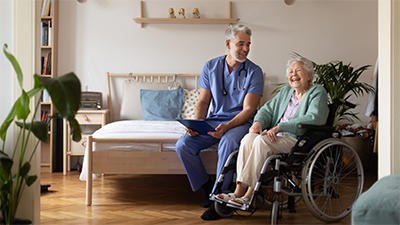
Watch for things like:
- The range from houses to dining-room, activity spaces, and outdoor areas. Long corridors that feel fine at 78 ended up being daunting at 88.
- The variety of modifications in flooring, thresholds, or small actions that can catch a foot or walker wheel.
- Handrail positioning, lighting levels, and contrast in between floor and wall colors, which help individuals with visual or cognitive decline navigate safely.
- Built-in features such as walk-in showers with seating, grab bars, and enough space for 2 individuals if one day your parent requires hands-on support.
- Quiet spaces that are not their apartment, where somebody with dementia can sit without being overstimulated by sound or crowds.
Also look at memory cues. Exist clear space numbers and customized cues on doors? Are corridors appreciable, or does every corner look identical? Citizens with cognitive loss frequently do far much better in environments with visual anchors: colored doors, unique artwork, small household-style layouts.
A building does not require to appear like a health center to be safe. The sweet area is a home-like environment that is subtly, thoughtfully engineered for a wide variety of physical and cognitive abilities.
Activities and social structure that can bend with ability
When people tour an assisted living home, they frequently look at the activity calendar to ensure there is "sufficient to do." That informs only a portion of the story. The genuine concern is whether the social life of the community adjusts as locals slow down, lose hearing, or establish dementia.
A future-proof program has layers: group activities for active homeowners, smaller and quieter alternatives, and one-on-one engagement for those who can no longer join groups. It also acknowledges that interests change. Somebody who loved bingo at 75 might be exhausted by it at 85 yet still respond warmly to music, gentle conversation, or time in a garden.
Ask how the team approaches homeowners who seldom leave their spaces. Do they make personalized efforts, or simply mark them "not interested"?
Look at who is actually participating, not simply what is offered. Are the most frail locals noticeable in the typical locations at all, with some level of support, or do they appear invisible? Communities that invest in bringing engagement to homeowners, rather than anticipating citizens always to come to them, adapt much better to increasing frailty.
This is not just about quality of life. Social seclusion can accelerate cognitive and physical decrease. A well-run activity program is a form of preventive care.
Money, designs, and avoiding financial traps
Future-proofing senior care is not simply clinical. It is monetary. Families are often shocked by how billing structures work once requires increase.
Assisted living prices generally follows among 3 designs:
- All-inclusive, where a flat regular monthly rate covers room, board, and a broad package of services.
- Tiered, where residents pay a base rate plus added fees for defined "levels" of care.
- A la carte, where each particular service, from medication management to escorts to meals, brings a different fee.
None of these is inherently great or bad. The essential thing is to comprehend how costs will move as care intensifies.
Ask for concrete examples, not just sales brochures. What did a resident pay when they relocated with light assistance, and what do they pay three years later with moderate needs? How does the neighborhood deal with situations where somebody outlasts their funds? If they accept Medicaid, what is the process and exist restricted Medicaid-designated apartments?
I have seen households who picked a low base rate community, just to be surprised later by an ever-growing list of small line products: assistance to the dining-room, assist with hearing aids, additional laundry. The reverse also takes place: a greater complete rate that at first appears expensive turns out to be steady and foreseeable over several years, especially for those with quickly increasing elderly care needs.
Future-proof options think about not only "Can we afford this this year?" however "What takes place if we require twice as much care and we are still here?"
Family participation and communication as requirements change
Even in the best assisted living communities, what families do or do not request makes a distinction. A culture that welcomes, instead of tolerates, household involvement is among the clearest indications that a home will handle modification well.
During your assessment, take notice of whether staff seem protective when you ask in-depth questions. A strong neighborhood will respond with specifics, not unclear reassurances. They invite family into care conferences, not simply when there is a problem however as a regular part of planning.
Notice how they interact about occurrences and changes. Do they tell you quickly if your loved one has a fall, even without injury? Do they keep you updated on weight modifications, sleep disturbances, or brand-new behaviors that suggest discomfort or infection?
The goal is a partnership. Families understand the elder's history, personality, and preferences. Personnel see the everyday patterns and small shifts. Future-proof senior care takes place when those 2 sources of knowledge are woven together, not when either side operates in isolation.
A focused list for future-proof evaluation
Use this list throughout tours and discussions, not as a scorecard, however as triggers for much deeper discussion.
- Does the neighborhood plainly describe what care they can not supply and when a resident must move?
- How often are care strategies evaluated, and who participates in that process?
- What is the personnel turnover rate, and how steady has leadership remained in the last three to 5 years?
- How does the neighborhood handle hospitalizations, rehab stays, and the combination of home health, therapy, or hospice?
- Can they offer particular examples of citizens who have "aged in place" there for several years through increasing needs?
The method personnel respond to these questions will reveal more about their capability to adapt than any shiny brochure.
When moving two times is much better than selecting badly once
Families in some cases feel massive pressure to find "the permanently location" on the very first try. That pressure can lead to stalemates or to tolerating bad fit due to the fact that "moving again later on would be terrible."
There is reality because issue. Moves are disruptive, and older adults can decline after each shift. Yet clinging to a bad match just since it might be "the last relocation" often backfires. A neighborhood that looks future-proof on paper but is weak in culture, interaction, or daily care will not suddenly enhance as your parent's needs deepen.
Sometimes the very best path is staged: a smaller assisted living community for a few years, then a transfer into a school with incorporated memory care, or from a private-pay setting to one that takes part in Medicaid once long-term finances are clearer. The secret is to pick each action intentionally, with an eye on the likely next one, instead of viewing every choice as irreversible.
An uncommon however important edge case involves couples with really various requirements. One partner might need memory care, while the other still drives, cooks, and interacts socially. In these scenarios, future-proofing typically implies focusing on campus-style settings where both assisted living and memory care are readily available in close distance, even if it implies some compromise on other choices. Keeping partners connected, rather than across town in various centers, matters exceptionally over time.
Bringing all of it together
Choosing an assisted living home is not simply about granite countertops, restaurant-style dining, or a busy activity calendar. It is a choice about how your parent will weather the storms that have actually not yet shown up: a broken hip, a sudden confusion episode, a progressive dementia, a sluggish slide in strength and stamina.
Future-proof senior care rests on a handful of core realities. Needs will change. Crises will happen. Financial resources will progress. What you are really selecting is a partner because uncertainty.
When you find a community that is truthful about its limits, disciplined in its care planning, thoughtful in its design, steady in its staffing, well connected to medical partners, and available to household collaboration, you are not simply resolving today's problem. You are constructing a structure around your parent's life that can flex, adjust, and react as the years unfold.
That is what it indicates to choose an assisted living home that really adjusts to changing requirements, and it is among the most concrete gifts you can offer to both your loved one and to yourself.
BeeHive Homes of Raton provides assisted living care
BeeHive Homes of Raton provides memory care services
BeeHive Homes of Raton provides respite care services
BeeHive Homes of Raton supports assistance with bathing and grooming
BeeHive Homes of Raton offers private bedrooms with private bathrooms
BeeHive Homes of Raton provides medication monitoring and documentation
BeeHive Homes of Raton serves dietitian-approved meals
BeeHive Homes of Raton provides housekeeping services
BeeHive Homes of Raton provides laundry services
BeeHive Homes of Raton offers community dining and social engagement activities
BeeHive Homes of Raton features life enrichment activities
BeeHive Homes of Raton supports personal care assistance during meals and daily routines
BeeHive Homes of Raton promotes frequent physical and mental exercise opportunities
BeeHive Homes of Raton provides a home-like residential environment
BeeHive Homes of Raton creates customized care plans as residents’ needs change
BeeHive Homes of Raton assesses individual resident care needs
BeeHive Homes of Raton accepts private pay and long-term care insurance
BeeHive Homes of Raton assists qualified veterans with Aid and Attendance benefits
BeeHive Homes of Raton encourages meaningful resident-to-staff relationships
BeeHive Homes of Raton delivers compassionate, attentive senior care focused on dignity and comfort
BeeHive Homes of Raton has a phone number of (575) 271-2341
BeeHive Homes of Raton has an address of 1465 Turnesa St, Raton, NM 87740
BeeHive Homes of Raton has a website https://beehivehomes.com/locations/raton/
BeeHive Homes of Raton has Google Maps listing https://maps.app.goo.gl/ygyCwWrNmfhQoKaz7
BeeHive Homes of Raton has Facebook page https://www.facebook.com/BeeHiveHomesRaton
BeeHive Homes of Raton won Top Assisted Living Homes 2025
BeeHive Homes of Raton earned Best Customer Service Award 2024
BeeHive Homes of Raton placed 1st for Senior Living Communities 2025
People Also Ask about BeeHive Homes of Raton
What is BeeHive Homes of Raton Living monthly room rate?
The rate depends on the level of care that is needed (see Pricing Guide above). We do a pre-admission evaluation for each resident to determine the level of care needed. The monthly rate is based on this evaluation. There are no hidden costs or fees
Can residents stay in BeeHive Homes until the end of their life?
Usually yes. There are exceptions, such as when there are safety issues with the resident, or they need 24 hour skilled nursing services
Do we have a nurse on staff?
No, but each BeeHive Home has a consulting Nurse available 24 – 7. if nursing services are needed, a doctor can order home health to come into the home
What are BeeHive Homes’ visiting hours?
Visiting hours are adjusted to accommodate the families and the resident’s needs… just not too early or too late
Do we have couple’s rooms available?
Yes, each home has rooms designed to accommodate couples. Please ask about the availability of these rooms
Where is BeeHive Homes of Raton located?
BeeHive Homes of Raton is conveniently located at 1465 Turnesa St, Raton, NM 87740. You can easily find directions on Google Maps or call at (575) 271-2341 Monday through Sunday 9:00am to 5:00pm
How can I contact BeeHive Homes of Raton?
You can contact BeeHive Homes of Raton by phone at: (575) 271-2341, visit their website at https://beehivehomes.com/locations/raton/, or connect on social media via Facebook
Sugarite Canyon State Park provides beautiful mountain scenery and accessible areas suitable for planned assisted living, senior care, and respite care enrichment trips.